ADVENT MESSENGER HERALD
Sunday Rest Returns to the Public Conversation
An Adventist perspective on faith, freedom, and the call to remain faithful to Scripture.
OCTOBER 9, 2026 • FAITH & RELIGIOUS LIBERTY
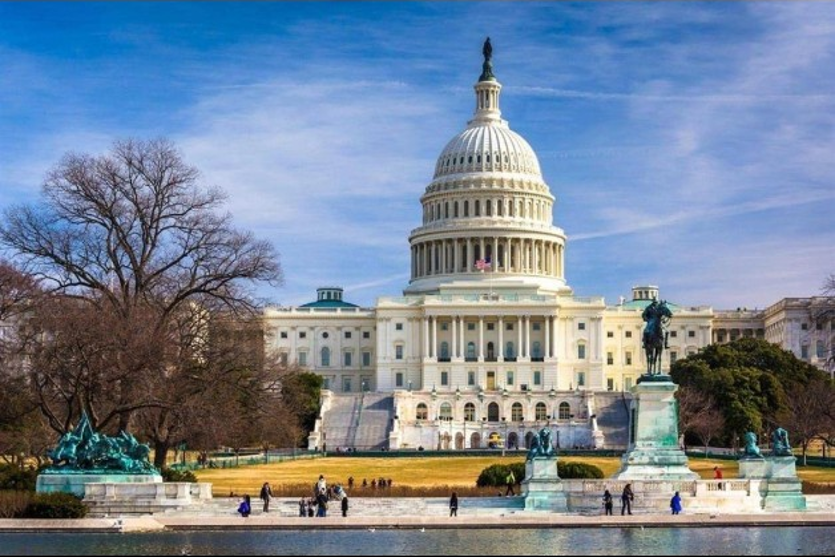
The United States Capitol in Washington, D.C. Illustrative photograph accompanying the discussion of civil authority and religious liberty.
A tired society longs for rest. Parents need more time with their children. Workers need relief from constant demands. Communities need opportunities to come together. These concerns are real, and Christians should care about them.
But when proposals to strengthen family life include government-backed Sunday rest, another question deserves attention: How can society protect time for rest while preserving every person’s freedom to follow God according to conscience?
For Seventh-day Adventists, that question brings together the Sabbath, religious liberty, and the Bible’s warnings about compulsory worship.
What is happening?
On January 8, 2026, the Heritage Foundation published Saving America by Saving the Family. The report includes a section titled “Support for a Uniform Day of Rest,” discussing Sunday closing laws and presenting a shared rest day as a way to strengthen families, religious participation, and community relationships. This is an advocacy proposal; the report itself does not enact a law. [1]
The North American Division of Seventh-day Adventists responded on January 18, expressing concern about proposals to restrict Sunday commerce through state and local government. Its response emphasized the right of every person to worship according to conscience. [2]
Similar advocacy continues in Europe. On March 3, the European Sunday Alliance promoted a shared work-free Sunday, emphasizing health, family life, and social connection. Its network includes churches, labor organizations, employers, and civil-society groups. The statement represents an ongoing campaign, rather than the announcement of a new Europe-wide Sunday law. [3]
Understanding the news
A public campaign, a legislative proposal, and an enacted law are different stages. The cited Sunday-rest reports document advocacy; they do not establish that a new nationwide compulsory Sunday-worship law has passed.
Why the Sabbath matters
The Adventist understanding of the Sabbath begins with Creation. Genesis 2:2–3 describes God resting on the seventh day, blessing it, and sanctifying it. The fourth commandment later declares:
“Remember the sabbath day, to keep it holy.” — Exodus 20:8 · KJV
The commandment identifies that day: “But the seventh day is the sabbath of the LORD thy God” (Exodus 20:10, KJV).
Seventh-day Adventists therefore observe the seventh-day Sabbath, Saturday, as a gift from the Creator and an expression of loyalty to Him. The church’s stated belief connects Sabbath observance with rest, worship, ministry, and the example of Jesus. [4]
The Sabbath also speaks tenderly to an exhausted world. Our worth does not depend on endless productivity. God invites us to pause, remember His care, and make room for worship and relationships.
We are saved by grace through faith in Christ (Ephesians 2:8–10). Obedience grows from that relationship; it cannot purchase salvation.
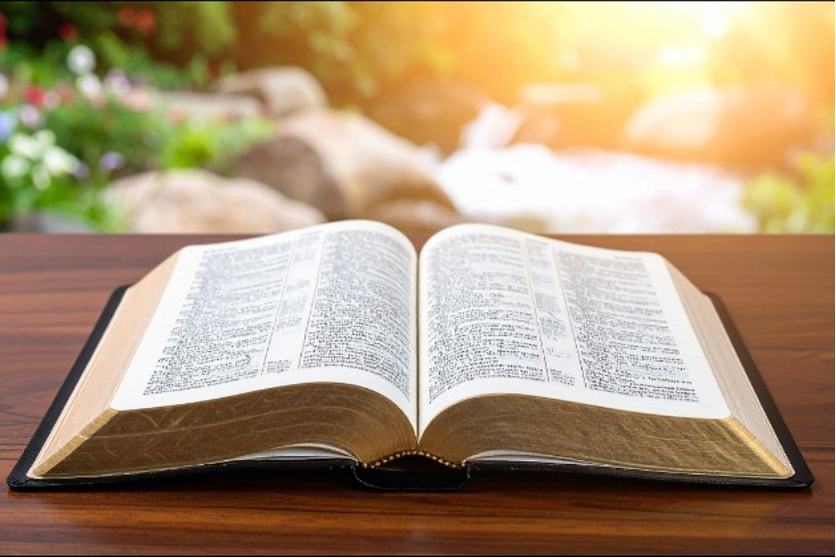
When religious conviction meets civil power
People should be free to attend church on Sunday, observe the seventh-day Sabbath, or hold another belief. Religious liberty protects that freedom for everyone.
The concern arises when government privileges a religious practice in ways that burden other consciences. For someone who already refrains from work on Saturday, an additional compulsory Sunday closure may create economic difficulty. The practical effects depend on the provisions and exemptions of any actual legislation.
Adventists support religious freedom beyond the interests of our own denomination. The church’s official statement commits to defending the religious liberty of all people, including those with whom we disagree. [5]
“We ought to obey God rather than men.” — Acts 5:29 · KJV
Civil authority has a legitimate place. Yet allegiance to God cannot be surrendered to human authority.
Christian unity must remain grounded in truth
Alongside Sunday-rest advocacy, efforts toward Christian unity continue. On October 1, Pope Leo XIV met representatives of the Lutheran World Federation and encouraged further progress toward visible unity, looking ahead to the 500th anniversary of the Augsburg Confession in 2030. That meeting concerned ecumenical relations; it did not announce a Sunday-enforcement agreement. [6]
Christians can treat one another with kindness, work together to relieve suffering, and defend freedom of conscience while acknowledging serious doctrinal differences.
Jesus prayed for His followers to be one, and in the same prayer He said: “Sanctify them through thy truth: thy word is truth” (John 17:17, KJV).
From an Adventist perspective, genuine Christian unity must remain accountable to Scripture. Fellowship does not remove the responsibility to examine what we believe and practice.
Reading prophecy responsibly
Seventh-day Adventists understand Revelation 13 and 14 as describing a final conflict involving worship, authority, and allegiance to God. Revelation 13 portrays coercion, including economic pressure. Revelation 14 calls humanity to worship the Creator and describes a faithful people:
“Here are they that keep the commandments of God, and the faith of Jesus.” — Revelation 14:12 · KJV
In Adventist prophetic interpretation, enforced Sunday observance becomes part of that final conflict. This understanding should be identified as our interpretation of Scripture, while current events must be reported according to the evidence available. The church’s Biblical Research Institute addresses this connection between Sunday observance and the final crisis over worship. [7]
We must also avoid condemning sincere Christians who worship on Sunday. Ellen G. White wrote that “there are now true Christians in every church” (The Great Controversy, p. 449). In the surrounding passage, she distinguishes sincere Sunday observance from a future, informed choice under religious enforcement. Her explanation does not justify declaring that everyone attending church on Sunday has received the mark of the beast. [8]
Faithful watchfulness requires both conviction and honesty. We should never announce that a prophecy has reached a particular stage merely because a headline sounds familiar.
How should we respond?
Our response begins with a living relationship with Jesus. A person can follow every religious headline and still neglect prayer, kindness, integrity, and the study of God’s Word.
We should examine original sources, defend liberty for our neighbors, teach the Sabbath with patience, and speak of other Christians with respect. We should also make our own Sabbath observance a blessing—a time when our families and communities experience something of God’s goodness.
The everlasting gospel stands at the beginning of the three angels’ messages (Revelation 14:6). Christ must remain at the center of our proclamation.
As religious and political movements develop, our calling is to remain awake, truthful, and faithful. We look forward with confidence in the Saviour who said:
“Let not your heart be troubled: ye believe in God, believe also in me.” — John 14:1 · KJV
Sources and further reading
News reporting and Christian interpretation are identified separately above. Scripture quotations are from the King James Version.
- The Heritage Foundation
Saving America by Saving the Family: A Foundation for the Next 250 Years
January 8, 2026 - North American Division of Seventh-day Adventists
Sunday Rest Proposal Raises Troubling Religious Liberty Concerns
January 18, 2026 - European Sunday Alliance
European Day for a Work-free Sunday: Guaranteeing Social Cohesion Across Europe
March 3, 2026 - Seventh-day Adventist Church
The Sabbath
Fundamental belief and biblical explanation - General Conference of Seventh-day Adventists
Religious Freedom
Official statement - Vatican News — Devin Watkins
Pope Leo: World Needs Ecumenical Witnesses to Christ
October 1, 2026 - Biblical Research Institute
Answers to Questions on the Mark of the Beast and End Time Events
Adventist biblical interpretation - Ellen G. White
The Great Controversy, page 449
Passage reproduced in The Sabbath Reform, EGW Writings
Photography
Illustrative photographs supplied by the reader; not photographs of the reported events. Original photographer and licensing information were not included with the supplied screenshots.
Leave a Reply
You must be logged in to post a comment.